
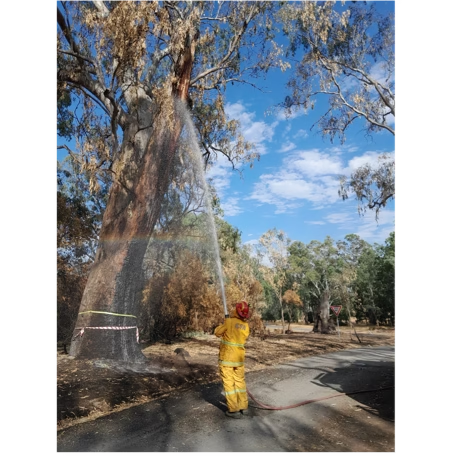
Thanks for helping save one old tree! Great to see DEECA and CFA crews working hard to save this old tree. She lost her 4 – 600 year old neighbour last week in the fires, and we hope she is finally extinguished in her hollow core.
There is no escaping the impact of the Longwood fire – either in the tired faces of friends and family, burnt hills and fences, ancient trees collapsed on roadsides or in paddocks. The ancient trees have taken an unfair battering in these fires, where many hollow bearing trees have succumbed either to the flames, or to the chainsaws where trees have been deemed dangerous. While we focus initially on ensuring our community and our animals are safe, we grieve our landscape too – how can we best support nature at this critical stage.
First and foremost a reassurance – nature is resilient. She is adept at recovery from fire, but we can help We have worked in environmental restoration for decades, and many of us have experienced times like these in the past. Here is what we have found has helped:
- Take a moment and a breather. Take some photos of your burnt country. It’s important to look back in a month or two and remember how much has changed. Already the grass re-shoots.
- Many of the younger trees, while burnt, won’t be dead. Give them time. However, our old ancient trees, hollow throughout, have been decimated. Ideally, if it is safe to do so, leave them in place or retain them as habitat on the ground. Other alternatives could be to place logs in creek corridors as habitat, or around existing paddock trees, away from the trunk.
- Protect your creeks, dams and springs. Without groundcover, they are vulnerable to silting up during the next rain. In creeks, silt reduces habitat diversity and extra nutrients can lead to low water oxygen. Silt traps, which can be as simple as logs placed across the contour or over a gully, can help slow the flow and deposit of sediment and loose soil.
- While it looks denuded, watch your bushland patches for germination. Seed often needs heat to crack the seed coat. Wattles and peas are likely to pop up, potentially species you have never seen before! This can also be a good opportunity to target weeds while they are small, giving our natives the best chance at healthy re-establishment.
Environmental groups in the burnt country have formed an alliance – Granite to Goulburn, Bushfire Recovery Alliance. Bushfirerecoveryalliance.com. We will be working with you, our community, in the years to come. You are not on your own.