Climate Ready Gardens

Climate Ready Gardens: Arboretum Open Day

Saturday 3rd May – 10.30 to 1.30

Join us for the grand finale of Council’s popular Climate Ready Gardens series! 🌱✨ Bookings Essential – Book Tickets Here

This FREE event is all about sustainable gardening, climate resilience, and community connection.

🌼 Hear from expert speakers sharing practical tips on climate-ready gardening

🪴 Join hands-on workshops and guided Arboretum tours

🛒 Browse and buy sustainable plant species from the on-site nursery

Whether you’re a seasoned green thumb or just getting started, this is your chance to gain knowledge, get inspired, and meet other gardening enthusiasts.

Held at the Arboretum on Saturday, May 3, from 10.30 AM to 1.30 PM, this free event is an opportunity to learn from expert speakers Kate Wall (Author), Lou Costa (Garden Designer), and Cathy Olive (Euroa Arboretum Manager). They will share practical advice on selecting the best plants for a changing climate, when and where to plant, and how to create a resilient garden.

Attendees can meet the experts, participate in hands on workshops, take a guided tour of the Arboretum, explore the native seed project and purchase plant species suited to sustainable gardening from the on-site nursery. Whether you’ve attended previous Climate Ready Garden sessions or are just beginning your climate-ready gardening journey, this event offers inspiration, knowledge, and the chance to connect with like-minded garden enthusiasts.

Everyone is welcome—don’t miss this special finale to the Climate Ready Gardens series!


What’s on

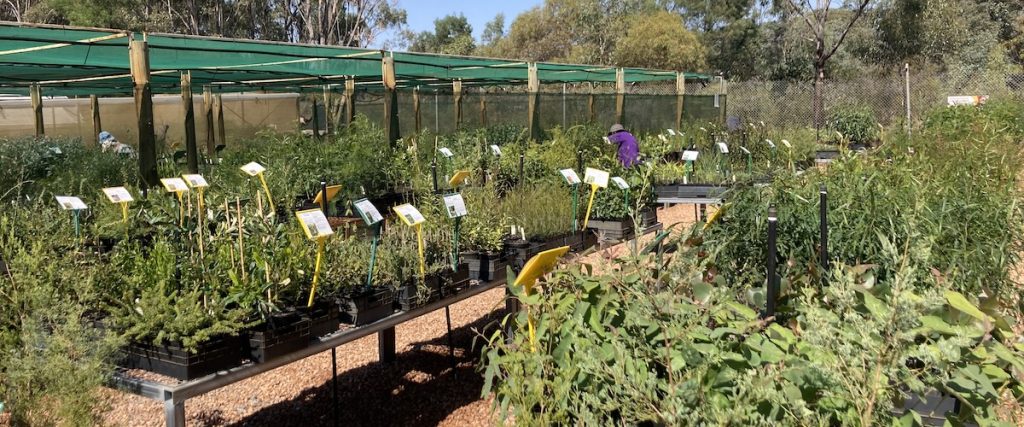
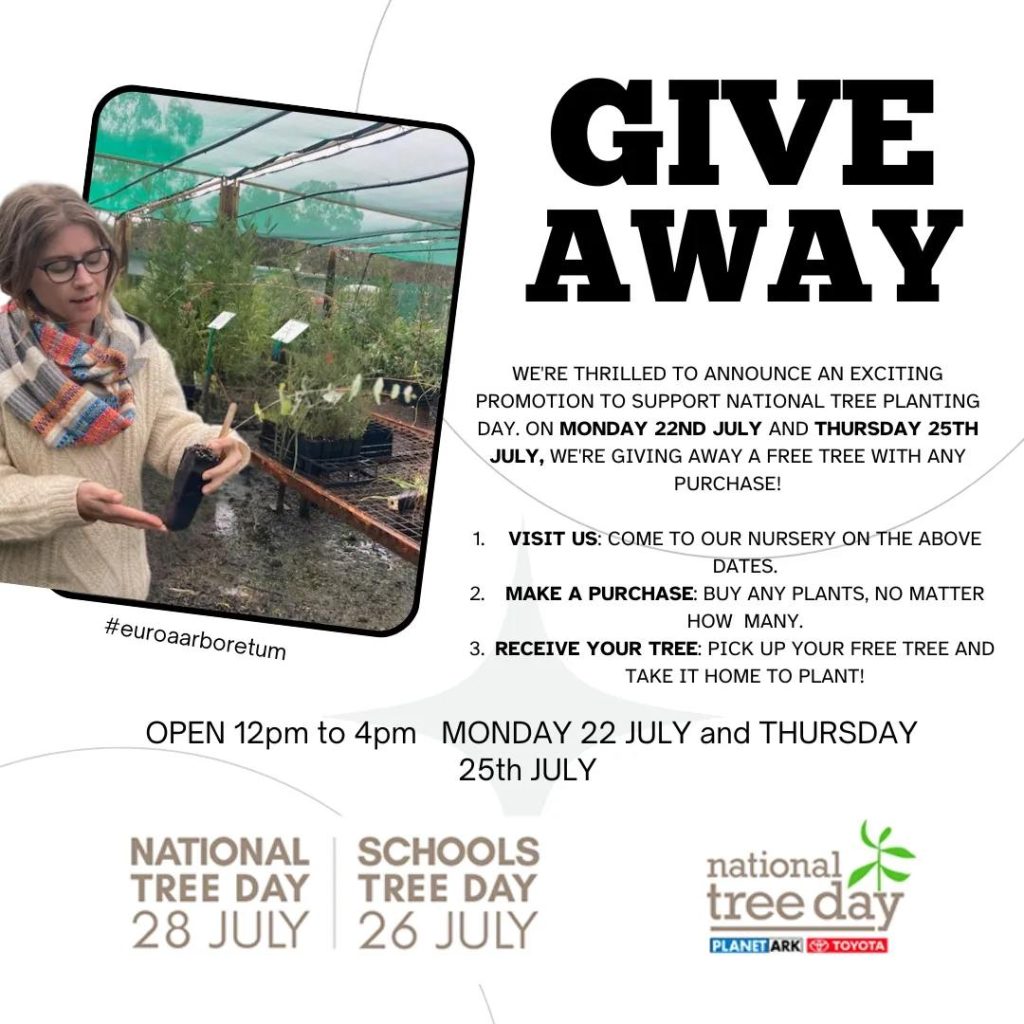
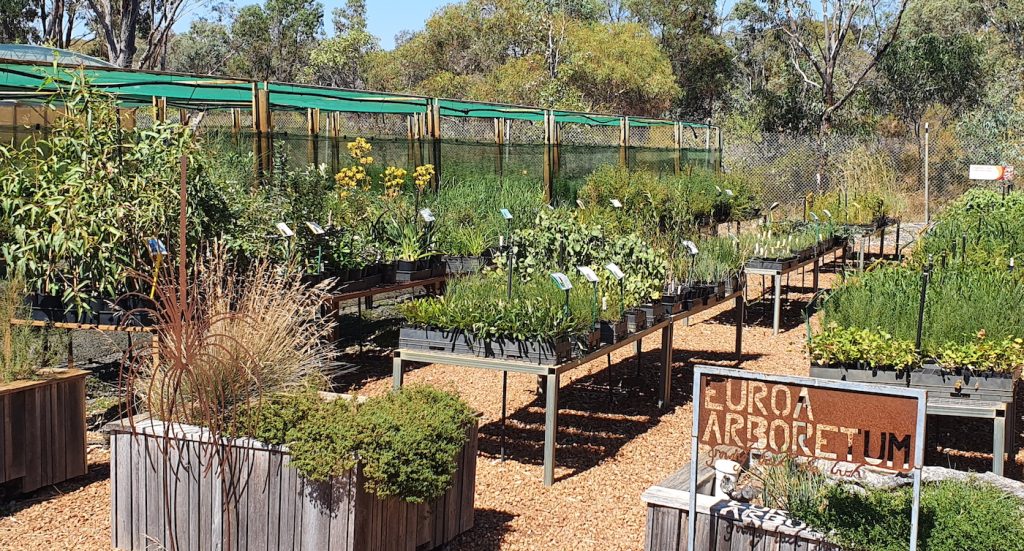
Nursery open – Chat to our wonderful nursery staff and purchase native plants.

Self-guided tour of the Arboretum – There are many options for a wide variety of visitors. You can take a long stroll around the whole site, or go on a shorter walk around the wetland areas, or just sit and contemplate! (map on reverse page)

Composting Table – Strathbogie Shire Council’s Climate Change Education Officer is here all day to answer questions about worm farming, home composting, how our green bin contents are turned into recycled compost and other questions you might have about waste and recycling.

Coffee van – Strictly BYO mugs. Enjoy a coffee, tea or cool drink and a light snack in the shade. Chat to other like-minded gardeners or have a quiet moment under the tress. 

2025 Nursery Opening

The nursery staff and volunteers have been working throughout the hot summer to grow plants to order and to stock our Nursery.
Our retail nursery is fully stocked with indigenous plants from the Goulburn Broken region with a selection of other native plants for your gardens.

3.3lt pots ($15) 1.5lt pots ($8) 600ml pots ($6) tubestock ($4.5).

This year we have some larger stock which we’ve potted up. The trees average 1m in size plus all our regular tube stock to choose from. Come down and chat to Jemma and Fearghus and they can advise which plants will best suit your soil types.

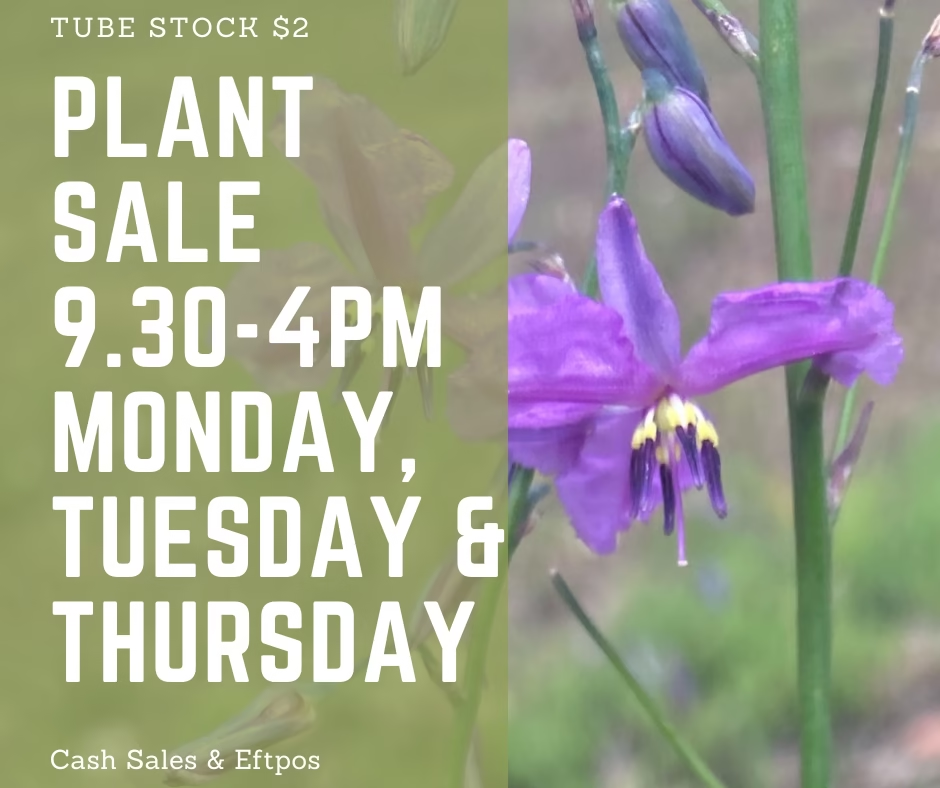
Nursery season opens Monday 17th March 2025
Opening Hours: 12-4pm Monday & Thursday
Large plants list

Lemon scented gum Corymbia citrodora A species of tall tree that is endemic to north-eastern Australia. It has smooth white to pink bark, narrow lance-shaped to curved adult leaves, flower buds in groups of three, white flowers and urn-shaped or barrel-shaped fruit.
Drooping sheoak allocasurina verticilliata Occurs on plains, dry ridges and rocky outcrops generally on shallow, gravelly soils.
Silver banksia banksia marginata Wide range of habitats, including dry forest. Variety of soils including sandy loams, clay loams, shales, peaty loams and rocky soils. Full sun or partial shade.
Lemon scented tea tree leptospernum pattersonii Fast growing, drought hardy native feature tree for sunny locations in both coastal and inland gardens. Leaves are freshly lemon-scented when crushed.
Clustered pomederis pomederis racemosa Moist well drained loam soils beside watercourses and in riparian forests. Frost tolerant. Dappled to semi shade.
Wedge leaf hop bush dondenea vicosa Common in dry rocky areas, drier slopes and sandy sites. Scattered across plains, slopes and low hills.
Roundleaf mint bush prosanthera rotundifolia It prefers a well drained, moist position with some shelter from direct summer sun.
Woolly wattle acacia lanigerium Woodland and dry forest, on poor gravelly and sandy soils.
Woolly grevillea grevillea lanigerum It is a spreading shrub with narrowly oblong to more or less linear leaves and clusters of pink to red, and cream-coloured flowers.
River bottlebrush callistemon sieberi Tolerates moist to wet conditions, but also dryness and poorly drained soils. Frost tolerant.

Large Property Orders

It’s not too late to put your large orders in. This way, your order is compiled before you arrive and you may select the month you wish to collect.

Remember that the best time to plant is after the good Autumn rains, don’t wait until Spring!

Download the order form. This is the most up-to-date plant list of what is currently available. The spreadsheet calculates the pricing which is shown on the first page

Seed

Reflections of a Seed Collector

Have you ever crumbled a dry pod in your fingers – scattering seed?  Allowed a bucket of berries to rot and smell – then wash and sieve them to find shiny black jewel-like seeds within the mess?  Had a bucket of seed flow through your fingers like a viscous liquid – the promise of countless new potential plants at your finger-tips or plucked Bidgee Widgee seeds from your socks or your dog’s muzzle?  Seeds – endlessly variable in how parent plants distribute their offspring – whether it be wind, fur, consumed or a tiny, pod explosion.  Every seed, some miniscule as dust, some hidden in pods or fruit – a perfect package ready to grow in the right conditions.

I am the daughter of a horticulturalist.  The sounds of latin were an early second language and observing plants and where they live ingrained in my DNA.  Every walk, every holiday – there was always a plant to be found and admired, and it if was seeding, a pocket in your jeans to be filled with seed – ready to germinate and grow at home.  I carry this tradition every day – the endless fascination of how a plant is developing its seed and always a pocket full of seed on the return from a walk or holiday.

Diversity

Every species has its unique take on producing seed.  But seed, and its abundance, in fact its explosion, in early summer, is also the beginning of the food cycle.  

Often a species has its own unique collection of insects.  Acacia paradoxa, Hedge Wattle, is one of the worst plants to harvest.  With fine, needle-sharp prickles, it is impossible to collect without splinters in your fingers.  To make harvesting bearable, thick welding gloves are a sensible move but leave you with little dexterity.  Loosely grabbing a branch and gently stripping pods into a bucket – leaves, pods and insects fall indiscriminately.  A little patch of Hedge Wattle in Grey Box woodland on the edge of Seymour, treated as a bit of a local wasteland, produced the most startling and dazzling array of insects as well as seeds.  Not only the nesting birds find the prickly plant a safe haven it seems.  Another favourite, Dodonea viscosa ssp angustissima, Narrow leaved Hop bush – papery pods that split 3 ways with seeds nestled within each papery wing.  As these are gently brushed from the shrub, always there are beautiful harlequin beetles that fall into your bucket.  Its quite common for our seed collecting team to spend morning tea or lunch with heads in our seed buckets, identifying the myriads of spiders, beetles and bugs moving through the pods.  We leave our bags open and allow them to escape through the day.

Rarely seen Jewelled Weevils – found a good home in the prickles of Hedge Wattle

Abundance

Most plants produce a dazzling abundance of seed.  The eucalypts, with tiny seeds within each wooden fruit, produce millions of seeds per tree most years.  Wattle seed pods drip with seed – each gram with the potential for about 100 new plants.  Some of the berry producers – like the Dianella lilies, are not as prolific, but encase each package of seeds in a berry – ready to be eaten and defaecated in a neat package of compost ready to germinate.  Where do all these seeds go?  Is it just a profligate waste of resources?

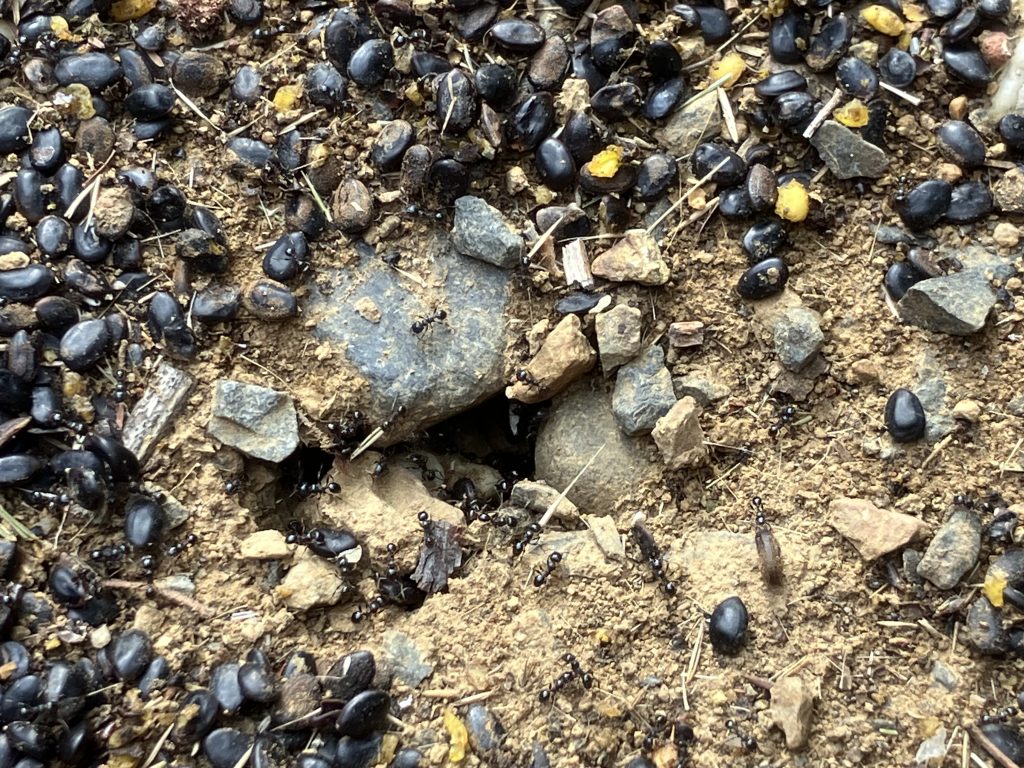
As a wild seed collector, our permit stipulates that we collect only 10% of the seed from a plant.  The parrots don’t like to be beholden to these rules.  But they are generally messy eaters – eating some then dropping plenty to the ground in branches or just shaking them off.  Some of the seeds might stick to furry coats and get scratched or rubbed off as an animal travels around.  Ants carry seeds back to their holes, dragging seeds underground and depositing the wasted fluff or in some cases, the actual seed, outside their holes.  Some seed winds up in the soil – the natural seedbank.  This seed is like a promise to the future of potential germination.  At the Arb, some of the hard coated pea seeds have germinated after a burn or soil disturbance.  Some plants have germinated from seed that we guess could have been 150 years old!

Ants collecting Silver Wattle. The funicle is harvested and the seed discarded.  But in the process, the ants scratch the hard seed coat of the wattle seed – priming it for germination

Ripe Seed

Getting our timing right when we harvest seed is an art.  Too early and seed is still green – it might be soft and milky when squashed and a bit resistant to pull from a plant.  It seems the plant is not ready to relinquish its seed just yet.

When seed is ripe, it almost falls into your hand – its ready for collection and distribution.  We can become part of the grand plan of collecting and sharing these plant genetics.

There are equally times when we are too late.  Often only by hours.  Daviesia has a habit of popping on mass – often on 1 day across vast areas.  The pods are dry, the temperature is just right, and all the pods you have watched for a week pop on their own cue – flinging seed out to the world.  Alternatively, the parrots beat you, or a summer storm sweeps through -the winds and rain effectively stripping the plant of seed.  It is surprising, from about the 200 plant species we harvest from, just how rarely we get our timing just right.

An annual reflection of climate

I’ve been asked recently, ‘how do you think plants will respond to climate change with seed production?’

This is an easy answer – those of us who are avid seed collectors have been watching the flowering and seed response of plants for the past 20 years or so.

Each year, and each species, is a little variable with seed abundance and viability.  This year, with a very dry spring, there has been little seed set.  When we open a wattle pod this year, maybe 1 or 2 seeds look black and plump – the rest look shrivelled and sunken.  If we were to grow them out, probably only those 1 or 2 shiny plump seeds will germinate. Instead, we sieve and vacuum all of the light, shrunken seeds from the batch to leave the good, viable seeds.

The wet year or 2022, we thought we would be in for a bumper seed crop.  Enough rain in winter/spring often means plants aren’t stressed and seed is abundant.  However, extreme rains and cool temperatures meant little flowering and pollination – once again, a poor seed year.

Some plants, Acacia implexa, Lightwood Wattle and Acacia mearnsii, Black Wattle, both common and widespread plants, seed mostly every second year.  However, between 2011 – 2021, these plants hardly produced seed across our catchment.  It appears they need 2 years in a row of reasonable, average rainfall.  Some plants of course, still thrive in these conditions – adding a layer of confusion to the overall theme.  But overall, other than 2011,2021 and 2023, seed abundance has diminished in the past 20 years.  

What does this mean for the animals that depend on seed?  I am not a zoologist, but my life is governed by seasonal cycles more than most.  I am lucky to live and work in places that allow me to observe nature.

I have a flock of about 8 – 10 Gang Gang cockatoos that visit my home each year.  They turn up to eat Eucalyptus dives, Broad leaf Peppermint, in Spring.  They progress through the seed cycles of Acacia dealbata, Silver Wattle, Eucalyptus rubida, Candlebark, Acacia rubida, Red Stem Wattle and Acacia melanoxylon, Blackwood across Spring and into summer.  This year, the normally abundant Silver and Blackwood Wattle have been very poor producers.  When I went to harvest the Red Stem Wattle seed, the Gang Gangs had beaten me to it.  They are eating all manner of seeds that they normally avoid or don’t rely on.  I harvested only a little Red Stem, despite it being a priority for harvest, and left the Gang Gangs to it.  Their need was greater than mine.

What this means for Seed Collectors

I have heard recently ‘the seed is out there, we just need more hands to collect it’.

While plants will still produce seed each year, it begs the question with climate change – is there enough seed to go around the food chain, is it viable and is 10% sometimes too much?  If you have driven 60km to that particular patch of bushland, for that particular plant and find only a few seeds – will you still take only 10% – or will you be tempted to take more than your share?  Will seed cost so much in travel and time from wild harvest that it becomes financially unviable to collect?

With carbon projects and government initiatives creating more demand, are we becoming part of the problem stripping seed from our landscape?  Are there other options?

This year, the normally prolific Acacia pycnantha, Golden Wattle was in short supply.  Either affected by Gall Wasp or just having a low year, it was not easy to find.  However, an earlier revegetation site, sown with harvest collection in mind a few years ago, hit prime production.  Just as we have our prime years, so do plants.  The multiple sown populations, collected from a wider area meant greater genetic diversity in the seed and we hope climate resilience.  This year, in one day, 5 people collected 7 wool bales of seed – equating to 30 kg of seed once cleaned.  This is the benefit of a large seed orchards.  Bounty, climate adaption, genetic viability and specifically grown for revegetation purposes, so it’s easy to collect.

Lucky for us, Natural Resources and Conservation Trust and Taungurung Land and Waters Corporation have invested in building seed orchards with us.  So far this year, we have 8000 plants over about 20 species targeted for seed orchards in 2025.  Still a drop in the ocean for what is required, but an important step away from reliance on wild harvest.

There is so much room for improvement in how we collect and use seed.  From orchards, to site selection, preparation and sowing, plus ongoing maintenance – if seed was respected as a precious resource, we would use it more sparingly, invest in research and walk alongside our Traditional Owners.  As a custodian of seed, may we remember to listen to the needs of country first, rather than the demands of people and government agencies.

Cathy Olive
Euroa Arboretum Development Manager

Casual Nursery Assistant positions

“In the lead up to the 2024/25 plant season, the Euroa Arboretum will be looking to engage two casual Nursery Assistant positions this summer (up to 2 days per week).  One role will cover approximately a 4–6 week period and the other role will be for approximately 4 months.  Previous experience in careful plant handling (dividing / potting up plants, propagation) along with general nursery experience will be strongly preferred, but not essential. 

Please send any questions or your Expression Of Interest to info@euroaarboretum.com.au and a short paragraph of any relevant experience you may have by COB Friday 15 November 2024.  All EOI’s submitted will be treated as confidential, as well as any discussions.  Thankyou!”

 Bringing Endangered bugs back to Taungurung grasslands 

 “Working to re-establish these small yet significant grasshoppers to their former range is a profoundly rewarding experience that will help secure their existence into the future. The Arboretum is a fantastic meeting point for community to engage and learn about the grasslands and this unique grasshopper.” 

 Invertebrate Conservation Coordinator Zoos Victoria, Jessie Sinclair

One hundred endangered grasshoppers have made a homecoming to protected grasslands on Taungurung Country, where they haven’t been seen in six decades.
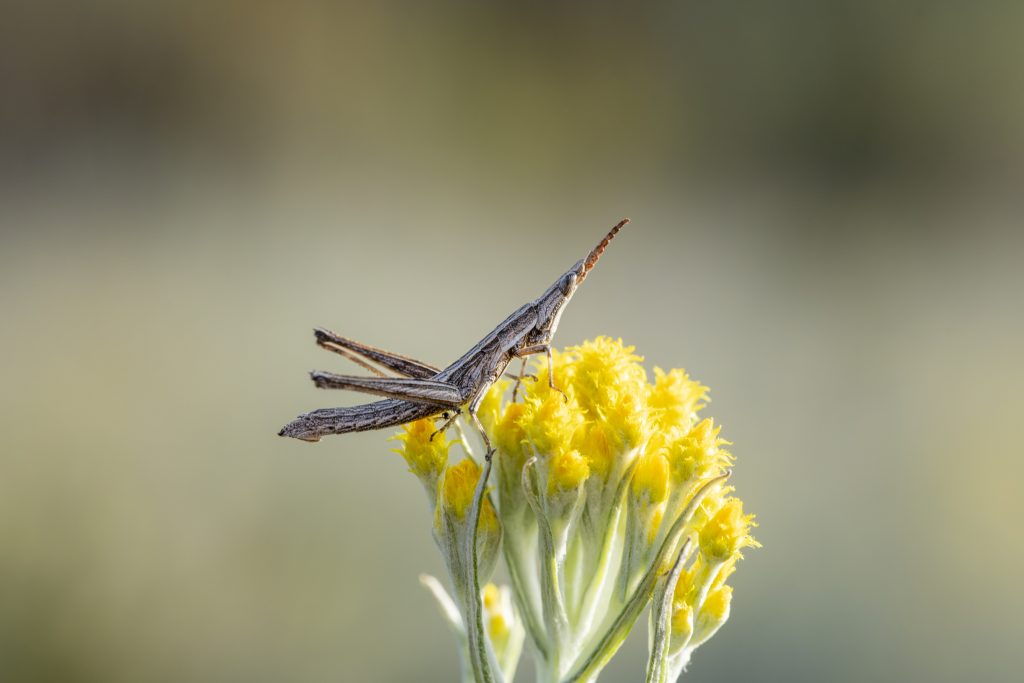
The Key’s Matchstick Grasshoppers – a species thought to have been extinct until their rediscovery in 2018 – were collected from a population near Tolmie, in east-central Victoria, by researchers from Zoos Victoria and the University of Melbourne.

The grasshoppers have been released to a grassland restoration area at the Euroa Arboretum in the hopes of establishing a haven for the precious invertebrate. This restored landscape includes a crucial mix of the native daisies and tussock grasses that provide food and shelter for the threatened species.

The newly established population will be monitored multiple times each year to track how they establish and spread through the grassland habitat.

The Key’s Matchstick Grasshopper was once widespread and abundant in New South Wales, the Australian Capital Territory and north-eastern Victoria; however, populations have drastically reduced due to habitat destruction since European colonisation. The species is clinging on in remnant patches of grasslands as small as 0.15 hectares.

The grasshoppers are flightless and are known to travel mere metres in their short lifespans. Each remaining population appears to be genetically distinct from populations that might only be a few kilometres away, also leaving whole populations vulnerable to fire and flood events.

Adult Key’s Matchstick Grasshoppers lay their eggs directly into the soil in spring and early summer. Nymphs hatch in summer and mature in winter for males and spring for females. At the end of the spring and early summer mating period, all adults will die off.

The Key’s Matchstick Grasshopper recovery trial is supported by the University of Melbourne, Zoos Victoria, Euroa Arboretum, Vic Roads and the Taungurung Land and Waters Council.

 ”By returning these over-wintering grasshoppers to suitable habitats we not only help them, but we also enrich food webs. This is because Key’s Matchstick can be a source of food for birds and lizards in the winter and early spring, when most other insects are yet to hatch. 

 University of Melbourne Professor Biosciences, Michael Kearney 

When you next visit the Arb, grab a brochure from the Picnic Shelter to see what part you can play in saving the Key’s Matchstick Grasshopper.

Natural Resources Conservation Trust

Commencement of Stage 1 of the Seed Strategy – Avenel SPA

In July 2024, the Natural Resources Conservation Trust awarded  $165,000  over two years to the Euroa Arboretum for stage 1 at Avenel of their Growing Native Seed Orchard Strategy. This forms part of the $370,000 project “Growing Climate Adapted Seed for the Goulburn Broken Catchment”.

The Goulburn Broken Indigenous Seedbank – Growing seed strategy aims to supply climate adapted, genetically diverse seed for large scale restoration goals.

The Trust’s stage 1 investment is part of a long term strategy developed by Euroa Arboretum that aims to:

  • Establish 20 hectares of new seed production areas across 3 sites.
  • Build a new seedbank facility at Euroa Arboretum to increase efficiencies and storage.
  • Upgrade existing intensive seed production facilities at Euroa Arboretum.

Goulburn Valley Water (GVWater) at Avenel
• New 10 hectare SPA of common widespread shrubs – commenced 2024
• 1 hectare of widespread groundcover species

To date $7,835  has been raised from donations towards ‘Seed for the Future’. We thank all of those who have donated!

We would like to acknowledge the support from Goulburn Valley Water, NRCT, GBCMA and contributions from Cargill.

Read our Seed Strategy

Plants go into the Avenel SPA

During August- September 2024, the Euroa Arboretum Bush Crew were down at the Avenel SPA site to commence works, Site prep has involved 2 days of slashing down the rows, and spraying weed competition in these rows using knapsack spot spray for sparse patches of Phalaris and the trailer spray unit where the Phalaris and onion grass is particularly dense.
They have also done some spray prep of onion grass along the eastern boundary fence. It is this fence line where the ground is drier, and native wallaby grasses are dominant, and where we plan to sow our wildflowers next year. For this year we will be planting roughly 300 Acacia flexifolia from up to 7 provenances, and about 750 Acacia montana from up to 15 provenances. Included in these provenances is a solid selection of plants from historical SPAs.

GV water have been great to work with and very accommodating with building access gate for us and securing stock proof fencing around the site. The crew have been working hard in rain, shine and wind, to get the works underway and have completed 8 days of planting.

2024 AGM

–COLUMN BREAK–

Thursday 26 September 6pm

Euroa Library Meeting Room

All welcome

RSVP to info@euroaarboretum.com.au

Join us at the 2024 AGM, if you would like to know more about joining the Committee, details are below.

Euroa Arboretum – Expression of Interest for General Members or Committee Members
If you are interested in becoming a general member or supporter of the Euroa Arboretum, or to join the Euroa Arboretum Committee, please express your interest or seek further information via info@euroaarboretum.com.au or download information about membership and committee roles.
Becoming a member/supporter just means that you publicly support the overarching objectives of the Euroa Arboretum and enables you to receive invitations to attend and participate in any Committee meetings convened.
The Committee also has several formal Office Bearing roles which have specific responsibilities. Role descriptions are provided in the document below.

If you would like to become a Member – download our membership form.

–COLUMN BREAK–Download Committee and Membership Information–COLUMN BREAK–Download Membership form–COLUMN BREAK–