Soils, Animal Health and Pastures – Mansfield 21st April

Summer temperatures and a long dry spell can stretch your farm resources to the limit by this time of year. Paddocks are often grazed to within millimetres, animals are looking for feed and water is getting low.

How do you plan for your farm for dry conditions? How do you get your stocking rates right year round, maintain a healthy pasture, protect your soils and keep your animals healthy and happy? 21st April is the last in the Healthy Hectares series for small and new landholders in Mansfield. Its jam packed with expert advice and information and it’s not too late to come along!

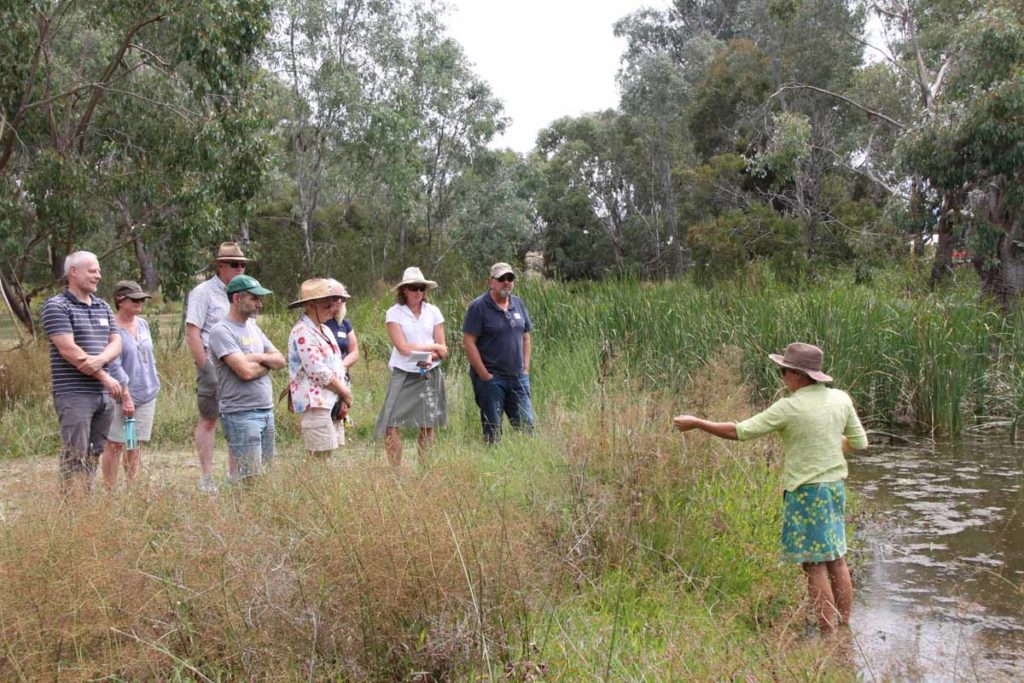
Cath Botta, Soil Scientist will discuss the fundamentals of maintaining healthy soils, Dr Sally Rekers, Mansfield Veterinarian, will chat about  safe animal handling and the responsibilities of choosing andowning animals. Matt Mahoney, local agronomist, will talk about grazing management and sustainable grazing enterprise. We’ll also visit a local property and learn direct from the landholder the challenges and decisions they have made on their journey as sm all property owners.

We hope you might join us! Please join us from 9.30am, Saturday 21st April, 2018 at Mansfield community Education Centre, 145 – 147 High S treet, Mansfield. Book Tickets Online

This course is a collaborative project between Up2Us Landcare Alliance and Euroa Arboretum with funding from BeyondSoilCare from the Goulburn Broken Catchment Management

Taungurung Day on the Seven Creeks

Photography by Cathy Olive andAndreas Kofler

Last Saturday, 17th March, we were blessed to have 5 Taungurung men and women share their culture with the local Euroa community.

Gathering on the banks of the Sevens, a small crowd gathered around Aunty Lee, Tanya and Stacey – trying their hand at weaving with materials collected on site. Sprawling on the grass, families chatted comfortably while being gently instructed how to weave.

Meanwhile, Shane and Uncle Frankie had a captive audience down on the creek building a fish trap. Kids splashed about and contributed to the project – placing sticks carefully, although without fish success this time around. Uncle Frankie had some beautiful hand made spears on display, and Aunty Lee had bought her eel trap she had made with her mum 14 years earlier – still looking in mint condition although a little fragile to handle these days.

Such a peaceful, friendly gathering and enriching to the soul. It wasn’t hard to picture similar gatherings occurring pre white settlement.

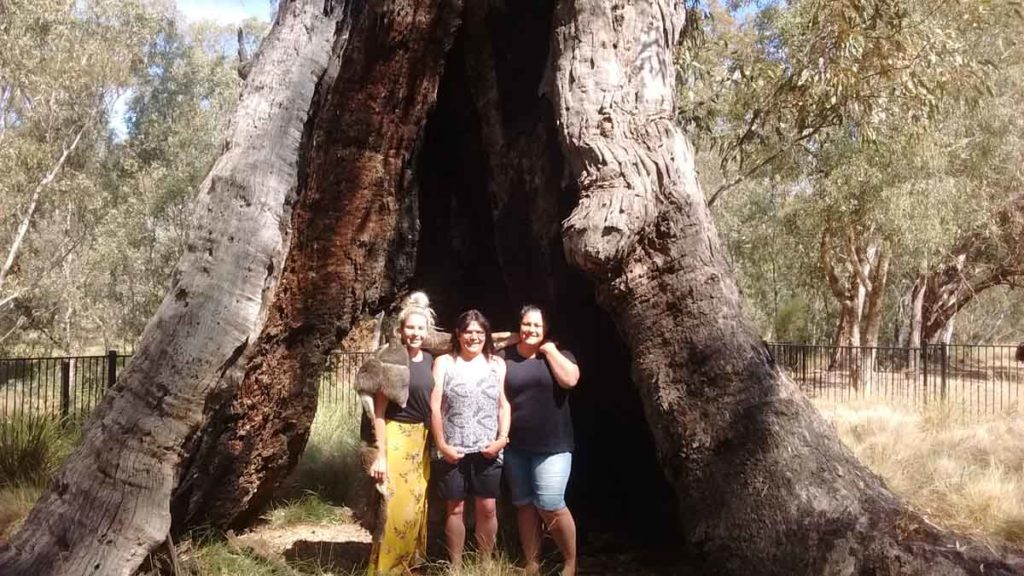
At days end, Aunty Lee, Tanya and Stacey gathered in the apron of the ‘Shelter Tree’ known in more recent years as the ‘Swaggie Tree’. A cultural heritage assessment had suggested it would have been used by Aboriginal people for centuries as a shelter – given its proximity to the creek and above the main flood zone. After so much disturbance in recent years, it was impossible to discern more detail of its history through an archaeological study. However, on seeing the tree, the Taungurung felt strongly that it was a ‘Birthing Tree’ – a place of cultural significance for women and where they may have retreated when it was time for a birth. I had a strong sense of the tree’s relief to finally have Taungurung women back in its skirts again, and Taungurung people gathered and sharing knowledge and culture back on country.

Cathy Olive

Native grassland establishment at Euroa Arboretum

If you have wandered into Euroa Arboretum lately, you would be forgiven for wondering what on earth is happening.

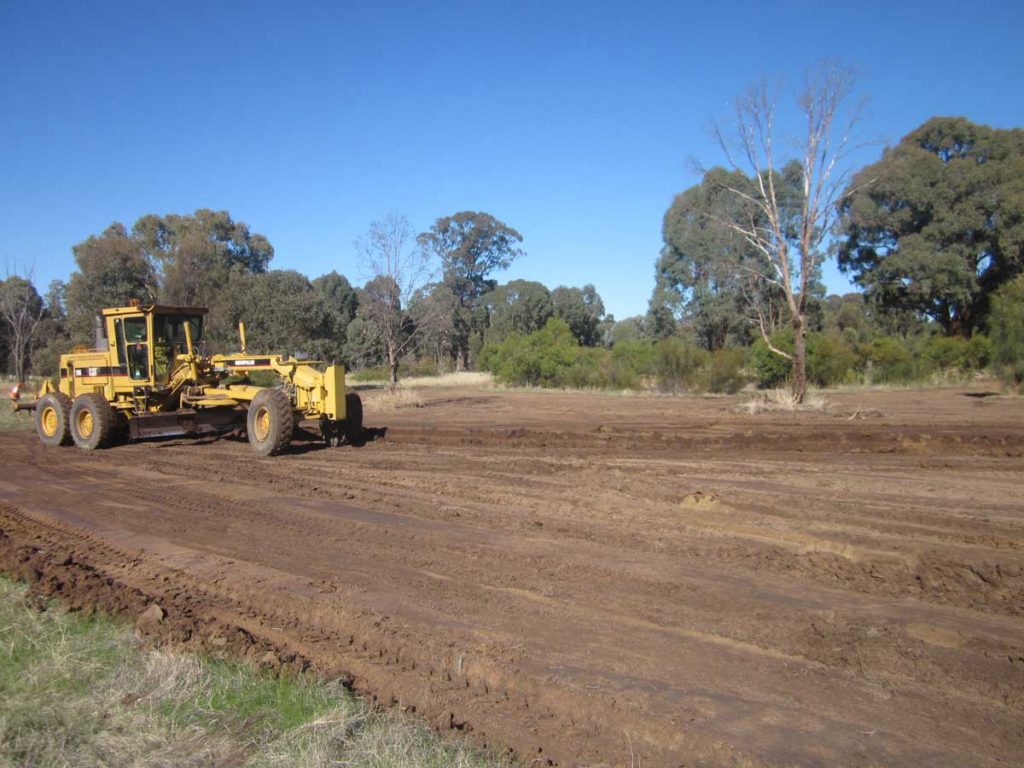
Graders, trucks and excavators are not a common sight normally, not to mention the burning activity around the grounds. All of this activity is part of our plan to restore our grasslands to something of their native diversity.

Two years ago we began with some scalping work – stripping the top 10cm of soil from the site and thereby removing the surplus nitrogen, phosphorous and weed seed that had accumulated over the years as a sheep property. Testing of soil at different depths initially identified that 10cm was the depth the weeds and nutrients dropped out of our soil profile. Native grasses and wildflowers are adapted to soils that have low nutrients and their tussocks allow space for lilies and daisies. They don’t survive well under our farming conditions. We then sowed this site with 60 different species of native grass, peas, lilies, daisies and groundcovers as seed. The results have been so remarkable, we thought we would do this again in areas where we had struggled for years with introduced grasses like Paspalum and Sweet Vernal Grass dominating the site. So if you go for a walk over winter at the Arboretum, or drop in for a fish, keep an eye on the bare earth – it’s a work in progress and we hope it will be transformed in the next couple of years. Check out our two year old grassland this spring. I guarantee it will be an extraordinary floral display. If you do have time, drop into the nursery on Monday or Thursday – there are some fabulous plants on offer.

Cath Olive
Euroa Arboretum Project Manager…

cool burn

Cool Burning

cool burn
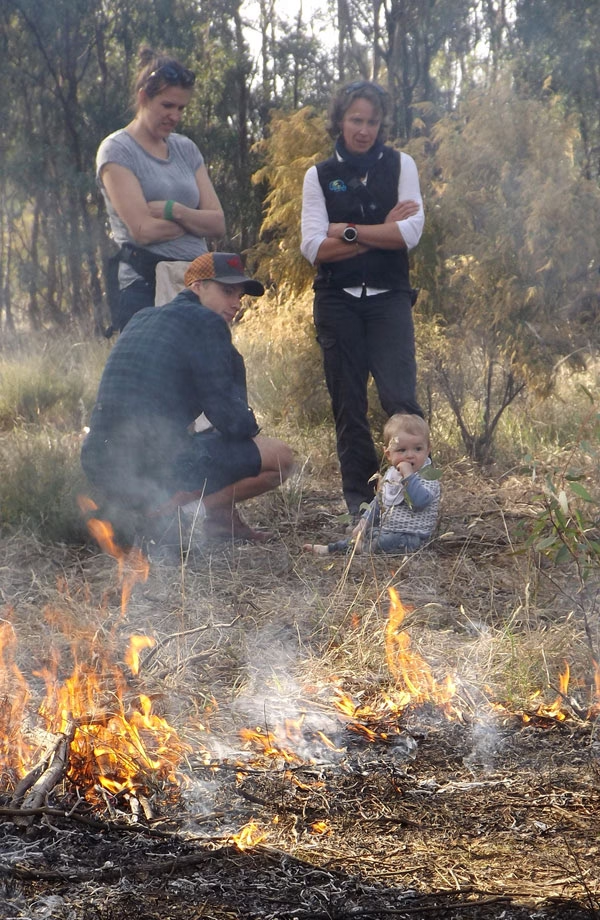
What is ‘cool burning?’ Surely fire is fire and it’s hot? At Euroa Arboretum, we are very interested in cool burning – burning at the end of autumn to burn off newly germinated annual weedy grasses. This assists us enormously with our weed control, reduces our chemical use and is easy to manage as true its name, it is cool. Immediately after the flames have passed over the area, the ground is cool to touch. We are finding, after 2 – 3 years of repeated burns, we have better annual grass control than after multiple years of chemical control.

Phil Hawkey, Native Vegetation Officer, CFA and Shane Monk, Taungurung Traditional Owner, joined me recently at Euroa Arboretum to conduct a cool burn. With a crowd in attendance, Phil gave some good tips for those wanting to try a cool burn. In summary these are:

  1. Get your timing right. Check your forecast and particularly your winds.
  2. On the day, check for leaf moisture. Trial burning a leaf – if a dead leaf burns gently while holding it horizontally, the moisture levels are about right.
  3. Check for wind speed and direction. Some flagging tape on a stick is a great homemade device for this check.
  4. Try a small area first – a 44 gallon drum with both ends cut out is a safe way to check how intensely the site will burn. Or my favourite – Phil’s pirouette with the watering can. Spinning in a circle to create a wet boundary, you can then light the inside circle immediately and the grass will burn to the wet edge.
  5. Keep it within the limits of your capacity or workforce, and have a metal rake, watering can and ideally a slip on at the site as safety.
  6. Try a small area first. Burning can have unwanted consequences on some weed species by providing bare ground for even better weed establishment.

It was brilliant to have Shane Monk, his daughter Ebony and grandson Jack attend and assist with lighting up. As Traditional Owners, this was a huge part of Shane’s family heritage and the way his ancestors managed out local landscape. We are all re-learning how to manage our modified grasslands with traditional techniques.

Cath Olive
Euroa Arboretum Project Manager

We would like to thank the Euroa fire brigade for their assistance mopping up on the day of the workshop and for responding to a small re-ignition the following day.

healthy hectares front page booklet

Healthy Hectares Booklet

biodiversity
pastures
pests
planning
soil
water

A country property is a great change of pace for many living busy Melbourne lives. The chance to slow down, breathe deeply and inhale eucalyptus instead of fumes, maybe grow some vegies or raise some animals. After years of visiting properties, many new landholders I meet express their delight in the space, the views, wildlife encounters and often mention they would like to earn some money from their property.

Just how much can you earn from a small acreage, and what are some of the land management challenges you might face on your block of land?
Planning your property is your first big step – identifying sensitive areas on your land – watercourses, steep hills and spring soaks. What is your fire risk and what steps will you take to mitigate that risk? Do you have weed or pest animal issues? Where are existing fences and water points for stock? Will you have animals and what are the legal obligations you will need to address as a property owner? Where is your native vegetation and do you want to create better links for wildlife?

It’s not easy navigating each of these questions on your own. We hope to help through the Healthy Hectares program by signposting you to information or local people that can help with your questions. We hope you’ll take the time to visit the website, www.healthyhectares.org.au, read through the booklet, or join us at a training day – these are listed under the News and Events on this website.
Contact Vikki Lane at vikki.lane@euroaarboretum.com.au for the booklet publication or further information about the training days.…